Planning Tool
Drape yardage, calculated.
Measure twice, buy once. Our calculator estimates the fabric required for each opening — panels, total width, and yards — with the allowance our workroom uses.
Drape No.
01
inches
inches
Reference
A few definitions.
So every input means what you think it means.
- Fullness
- The ratio of fabric width to finished panel width. 2× feels minimal and tailored; 3× is the designer standard and gives a generous, architectural pleat.
- Pleat Type
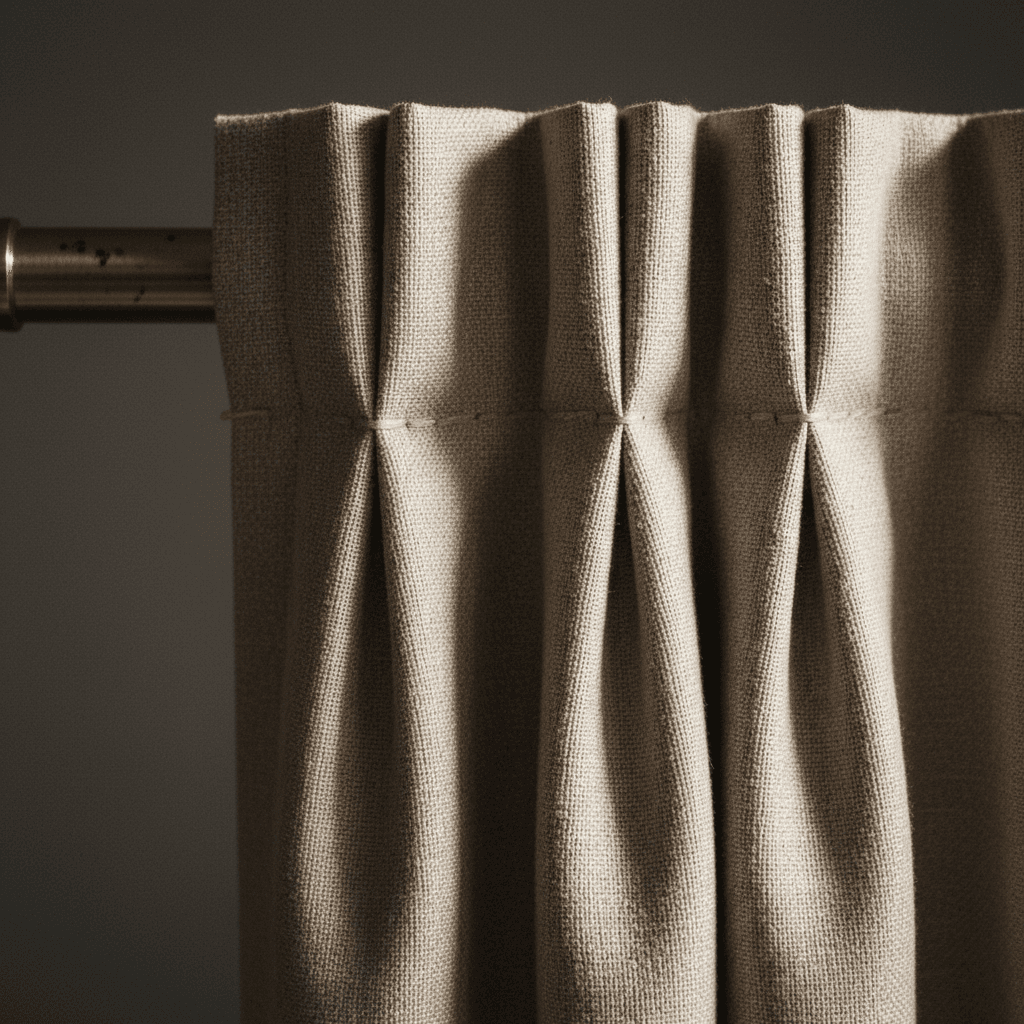
- Ripplefold reads clean and modern. Pinch and French pleat are traditional and precise. Inverse pleat sits flat at the top and cascades below.
- Roll Width
- The width of the fabric bolt. 54" is common for residential fabric; 118" is wide-width (railroaded) used for seamless floor-to-ceiling drapery.
- The +20" Allowance
- Our calculation adds 20 inches to your finished length to cover rod pocket, heading, hem, and a proper break at the floor.
The Formula
How the math actually works.
Step 01
Adjusted length = finished length + 20″ (rod pocket, heading, hem, break)
Step 02
Total width = finished width × fullness ratio
Step 03
Panels = total width ÷ roll width (rounded up)
Step 04
Yardage = (panels × adjusted length) ÷ 36 (rounded up)